
10 Guitar Techniques For The Holidays
10 Guitar Techniques For The Holidays

Marcel Ardans
Every year when the lights go up, the snow comes down, and the coffee shops break out the pumpkin spice, guitarists across the world begrudgingly reach for the holiday standards. Trust me, I get it, the yearly ritual can get old quick. So I decided to give those old classics a fresh coat of snow. The Christmas With Marcel Tab Book gathers 10 Christmas songs, each arranged using different guitar techniques, from flatpicking and crosspicking to hybrid picking, chord melody, Carter style, and more. It’s part holiday songbook, part technique sampler, and part historical field guide through the strange and wonderful ways guitar playing has evolved in America.
If you want to get a copy of the book, (did I mention it’s by donation?) you can visit the Tab Archive and snag a copy but if you just want to hear about the different guitar techniques, stay with me. Many guitarists have a, “what I play, is what I play” attitude and that can be great. But there’s lots of creativity to be unlocked by sampling guitar disciplines you might be less familiar with. Here’s a brief guide to the guitar techniques present in the Christmas With Marcel Tab Book to inspire you to take your playing to the next level.
Bluegrass Guitar Techniques
It’s Beginning To Look A Lot Like Christmas (Flatpicking) – Flatpicking is the technique used when playing lead guitar in a bluegrass context. It tends to be mostly, if not entirely, alternate picking and dense with embellishment. The style really began to be developed in the 1950’s and was fairly standardized by the late 1960’s, think of players like Clarence White, Doc Watson and Tony Rice. You’ll notice nearly every eighth note has been filled making the melody full of extra information and even frenetic at times. This is a very common line construction for lead guitar lines in a bluegrass ensemble. Imagine the guitarist desperately trying to be heard over even the quietest banjo player and you’ll understand why this arrangement is so busy.
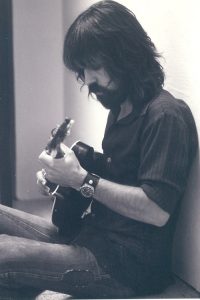
Silent Night (Crosspicking) – Crosspicking is a bluegrass guitar technique most commonly associated with George Shuffler though there are a few earlier examples. The style is most easily defined as an attempt to translate Scruggs style three-finger roll patterns to the acoustic guitar. Instead of using fingerstyle or hybrid picking to achieve this translation, crosspicking is instead done using only a flatpick. This limitation creates unique difficulties but also opportunities. The melody is normally placed as either the highest or lowest note in a roll pattern and the surrounding notes of the roll pattern are filled in by chord tones. The resulting sound is a long string of short arpeggios that continually place the melody on a pedestal. You can almost conceptualize it as a chord melody arrangement, using only cowboy chords, where every chord must be arpeggiated.

The First Noel (Modern Crosspicking) – Traditional crosspicking is full of arbitrary limitations and in pursuit of replicating a Scruggs style banjo roll, many of the strengths of the guitar end up discarded. As you begin to mix guitar strengths in with the limitations of the banjo you discover a new sound, not quite crosspicking but also not quite flatpicking. The greatest example of what I’ve arbitrarily chosen to call “Modern Crosspicking” is the 1983 album by Tony Rice, Church Street Blues. You can hear in Rice’s playing that he very clearly respects the tradition of crosspicking but is not afraid to break a roll pattern with hammer-ons, pull-offs, single string lines, double stops, or a host of other things. I like to conceptualize this style as a very arpeggio forward sound that isn’t afraid of breaking the linearity of flatpicking or interested in maintaining the rhythmic continuity of crosspicking.

Country Guitar Techniques
I’ll Be Home For Christmas (Carter Style) – Carter style is an early country lead guitar technique developed by Mother Maybelle Carter of the Carter Family (first recorded in 1927). Maybelle didn’t play like this with a flatpick but we will be, this approximation is more useful in the modern day. Carter style is folk music’s version of chord melody but instead of playing the harmony and melody in dense voicings, Carter style takes a classic boom-chuck rhythm and replaces the “boom” with the melody. What you’re left with is almost two guitar parts played at the same time, a lead line and the boom-chuck. One difficulty with Carter style is it’s really meant to work with cowboy chords, so the chord changes in this arrangement have been simplified for that purpose.
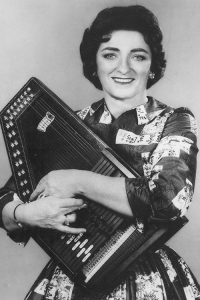
Rudolph The Red-Nosed Reindeer (Travis Style) – Travis style is named for Merle Travis, who is certainly the source of the style’s popularity but not the originator. That honor goes to Arnold Schultz, a traveling bluesman who taught the style to Mose Rager who then taught it to Merle Travis. Travis style is, in some ways, the opposite of Carter style. Where Carter style picks the melody while retaining a strum, Travis style picks the melody while maintaining a bass line. This is achieved using a thumbpick (t) for the bass line, as well as the index finger (i) and the middle finger (m) for playing a melody above. Much like chord melody and Carter style, Travis style can be played unaccomopanied making it a strong choice when you don’t have a band with you.

O Christmas Tree (Country Sixths) – Sixth intervals are not only found in country music, they’re also a staple sound in Alpine yodeling. In the early 1900’s, yodeling acts were popular in Vaudeville style theater alongside hillbilly acts that would later form the basis of the Hillbilly genre of music. As Vaudeville died, early notable acts in the Hillbilly genre, like Jimmie Rodgers, were known for incorporating yodeling into their performances. The Hillbilly classification splintered into genres like country, folk, and bluegrass, and the sound of the yodel was severed from its Vaudeville association only to be codified as part of American roots music. In fact, country guitarists were quoting “yodel style” sixth licks before the term country music was coined. For an example, listen to the guitar kick-off to Hank Williams’ Lovesick Blues, Williams’ following yodel is in the style of Emmett Miller, a Minstrel and later Vaudville performer.

Other Techniques
Have Yourself A Merry Little Christmas (Chord Melody) – Chord melody is a jazz guitar technique that involves playing dense chord voicings while also creating a clear melody, normally in the highest voice. The style stems from early 4-string jazz banjo where chordal solos were much more audible than single string lines. Many of these players transitioned from banjos with 4-strings to arch top guitars with 6-strings. The added strings provided more harmonic opportunities as jazz evolved . The overlap in tuning of the banjo and guitar allowed them to pull along some of their chord melody methodology. One thing that always strikes my students about chord melody arrangements is how liberally diminished chords can be used. A look at the Barry Harris method will get you up to speed if you want to know how that works.
Angels We Have Heard On High (Hybrid Picking) – Hybrid picking is a “best of both worlds” technique, while holding the flatpick between your thumb and index finger you also use your middle finger (m) and ring finger (a) to fingerpick. It has no specific originator but it definitely rose to prominence in the mid-1900’s. It is sometimes used to play a faux-Travis Style but is more often used to play passages that would be difficult or impossible to navigate a single pick around. For instance, two notes played simultaneously on two non-consecutive strings. Rather than hearing a bass line and melody, like you might hear in a Travis Style arrangement, you’re more likely to hear a guitarist control multiple “voices” and/or navigate arpeggios and double stops with greater ease.
Deck The Halls (Floating) – Floating is a technique that has been discovered and rediscovered many times, consequently it goes by many names. In the classical world you’ll find campanella (“little bell”), this term implies a fingerstyle approach in the plucking hand ( tima ) played on a nylon string acoustic guitar. In the country world you’ll find harp scales, this term implies hybrid picking in the pick hand (┍┑, ⋁ , m , a ) played on an electric guitar. In the bluegrass world we seem to have settled on floating, this term implies flatpicking in the pick hand (┍┑, ⋁ ) played on a steel string acoustic guitar. All of these terms attempt to describe the distinct sustain and chime of playing a melody using a combination of open strings and fretted notes higher up the neck. It’s a particularly beautiful sounding technique but a very unintuitive technique with regards to fretboard logic.
We Wish You A Merry Christmas (Articulations) – The unsung heroes of all of these different guitar techniques are the articulations: hammer-ons, pull-offs and slides. They allow us to make our arrangements fluid, more musical and my favorite, easier to play. The term “slide” is the oldest term of the three but still very recent. Other terms such as schleifer, coulé, glissando, and portamento predate “slide” in the musical lexicon. The first usage of the word “slide” that I was able to identify is from Briggs’ Banjo Instructor (1855). I scoured instructional guitar books from the 1800’s but couldn’t find any contemporary guitar instruction that used the term. Similarly, hammer-on and pull-off both come from banjo instruction, specifically Pete Seeger’s How to Play the Five-String Banjo (originally self-published in 1948).
Facebook
Twitter
Pinterest
Reddit
Email

How We Took Over IBMA: World of Bluegrass
Marcel Ardans
September 12, 2024

Molly Tuttle: From Bluegrass Roots to City of Gold
Marcel Ardans
August 16, 2024

12 Traditional Bluegrass Licks for Today
Mike Riedman
August 24, 2022

Fiddle Tune Primer
Marcel Ardans
August 4, 2022

The Fiddle Tune Secret, Part One
Mickey Abraham
November 22, 2021

Using Licks in a Bluegrass Song, Part Three
Andy Hatfield
August 9, 2021

Using Licks In A Bluegrass Song, Part Two
Andy Hatfield
May 3, 2021
More Articles

Bluegrass Basics: The Major Scale
Marcel Ardans
January 23, 2019
The Fiddle Tune Secret, Part One
Mickey Abraham
November 22, 2021

Bluegrass and Jazz Improvisation
Joey Pilot
June 11, 2019

10 Must Know Country Telecaster Licks
Marcel Ardans
February 5, 2019

Blue Notes In Bluegrass? What You Need To Know!
Marcel Ardans
April 9, 2019